

Namibia at a Glance
Namibia is a country that feels both ancient and alive, with landscapes so vast they seem painted by the gods themselves. From the endless dunes of the Namib Desert to the wildlife-rich plains of Etosha National Park, every corner tells a story. Once a German colony and later governed by South Africa until independence in 1990, its history is written in both its architecture and its people.
Travel here is straightforward but comes with a few quirks worth noting. Namibia uses the Namibian dollar (NAD), which is pegged to the South African rand and accepted interchangeably within the country. However, take note: South Africa will not accept Namibian dollars. The good news is that most shops, lodges, and restaurants accept credit cards with no surcharge, making payments easy. Just don’t forget to pack a power plug adapter for Type D or M sockets—your Aussie chargers won’t fit otherwise.
Our group of couples from Australia joined a guided 4×4 bus safari tour, a great way to tackle Namibia’s long drives and rough gravel roads. While the bumps and potholes in Etosha tested our patience (and our seat cushions), the rewards were unforgettable -moments of pure magic that still make us smile.
Etosha National Park: Bumps, Big Cats, and Rhino Surprises
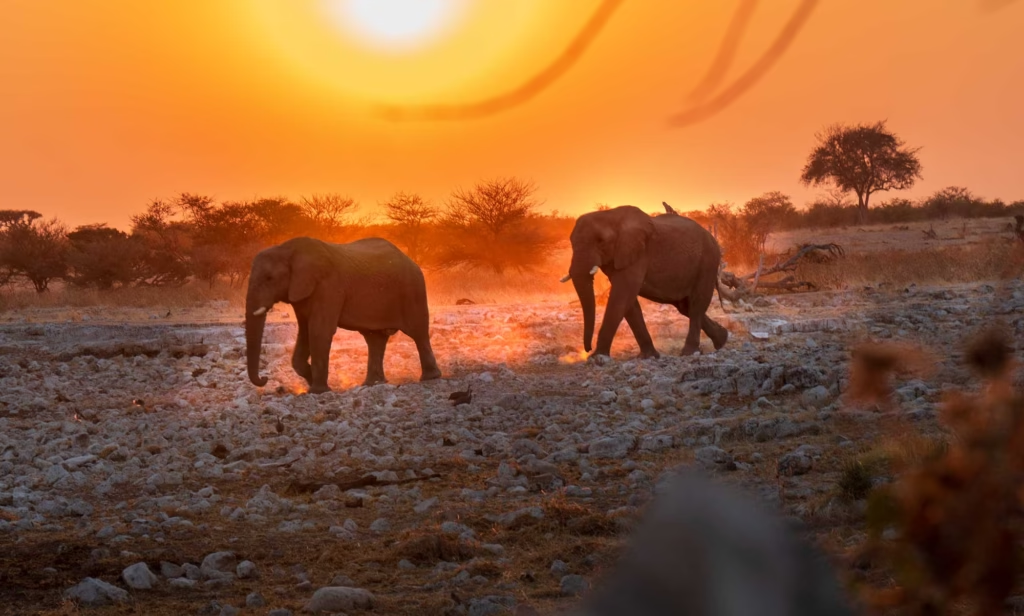
Etosha is one of Africa’s most iconic parks, its vast salt pan so immense it can be seen from space. We stayed in bush chalets at Namutoni Camp and later in the much-sought-after waterhole chalets at Okaukuejo Camp. Sitting on the raised seating as the sun dipped, we watched elephants wander in for their evening drink, then giraffes and rhinos taking their turns as night fell.
The next morning, as we headed out for a game drive, we were lucky enough to witness something extraordinary—two black rhinos mating, while a second male circled hopefully before being chased off in a dramatic, once-in-a-lifetime encounter. Needless to say, our group had a field day turning it into a running joke. One wag even reworked The 12 Days of Christmas into The 12 Days of Safari, complete with the unforgettable line “two rhinos rooting.” Let’s just say it stuck around longer than any pop song earworm.
Later that day, as if Etosha hadn’t spoiled us enough, we spotted a coalition of four male cheetahs (something our local guide confessed he’d never seen before) strolling towards an unsuspecting group of springbok, their sleek bodies glowing golden in the morning light. Add to that giraffes striding like dancers across the plains, elephants dust-bathing, and more zebras than you can count crowding the waterholes—it was the kind of safari you dream about.
Yes, the roads are rough in Etosha, but every bump was worth it. Each rumble seemed to lead us closer to another surprise: a huge herd of zebra, an ostrich with chicks following behind or a magnificent oryx standing proudly by the side of the road.
Twyfelfontein: Stories Written in Stone
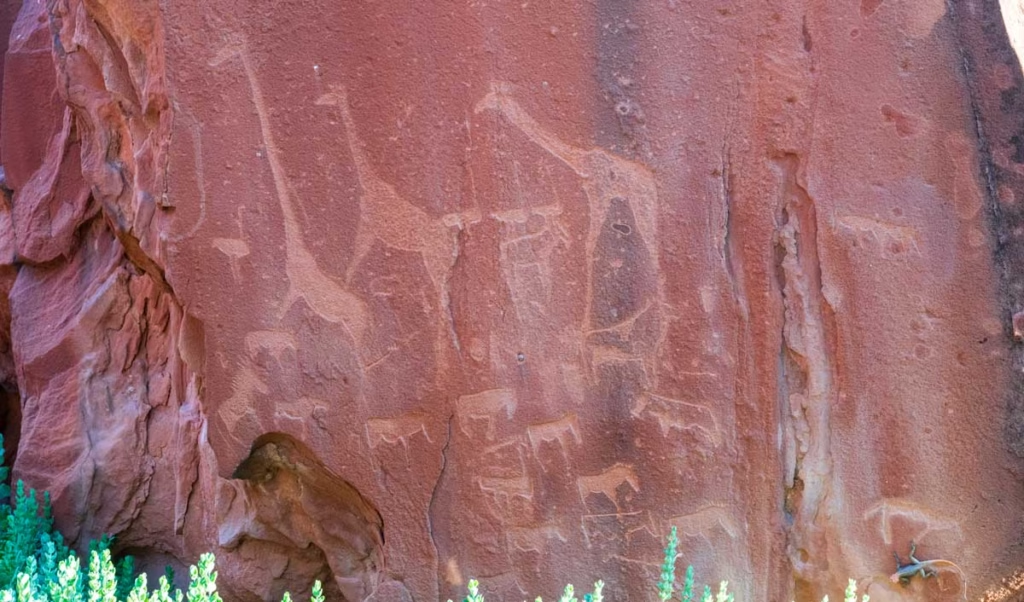
Heading southwest, we reached Twyfelfontein, a UNESCO World Heritage Site. Here, the desert landscape is scattered with more than 2,000 ancient rock engravings, carved by the San people thousands of years ago. The petroglyphs—depicting giraffes, lions, and hunters—are a humbling reminder of how long people have lived in harmony with this land.
We stayed at Twyfelfontein Country Lodge, which deserves special mention. Its architecture blends seamlessly into the ochre hills, built to mirror the surrounding rock formations. From our terrace, we watched baboons scramble across the cliffs at sunset, their silhouettes etched against a sky glowing red and purple.
The combination of heritage, scenery, and wildlife made Twyfelfontein a highlight. The stories told in stone feel eternal, yet the baboons’ playful antics reminded us that life here continues as vibrantly as ever.
Cape Cross and the Skeleton Coast: Into the Fog
From the warmth of Twyfelfontein, we drove west toward the Skeleton Coast and watched as a dense fog rolled inland. By the time we reached Cape Cross, the temperature had dropped so sharply it felt like we’d been transported to another season entirely. Out came the jackets, beanies, and scarves as we braced against the icy air drifting off the Atlantic, courtesy of the Benguela Current, a cold ocean stream that collides with the desert heat, creating dense fog that can travel 100km inland.
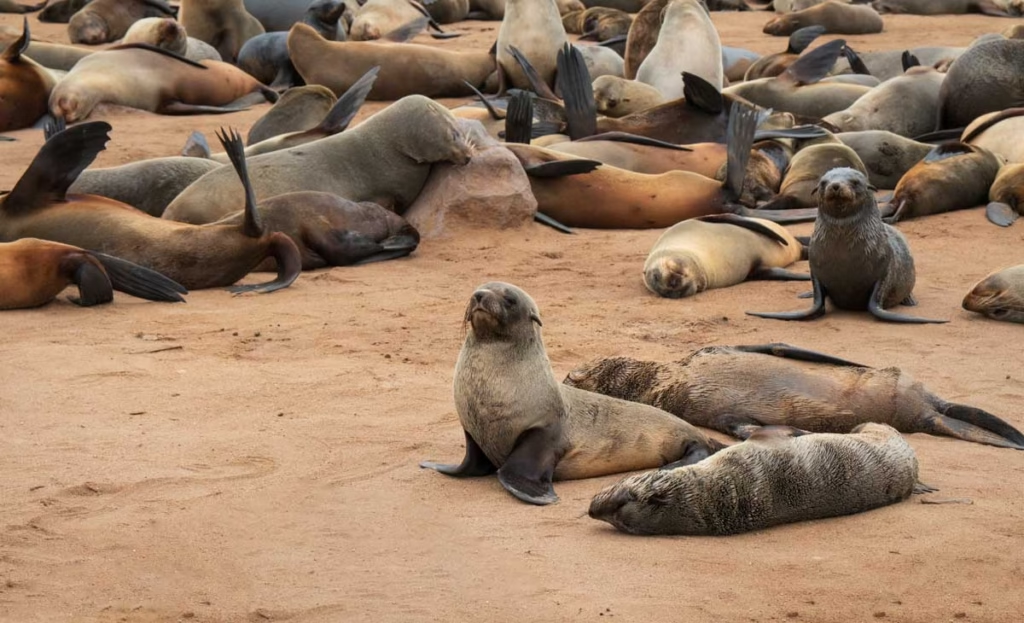
Bundled up like mismatched penguins, we made our way to the famous Cape Cross Seal Colony, home to one of the world’s largest gatherings of Cape fur seals, sometimes numbering over 200,000 during breeding season. The sight was absolutely incredible—thousands upon thousands of seals sprawled across the sand, jostling, barking, and flopping around with endless energy.
But here’s the thing no guidebook fully warns you about: the smell. It hit us like a wall! Let’s just say “fragrance of the sea” took on a whole new meaning. Many of us instinctively pulled our scarves up over our noses, turning them into makeshift filters while trying not to laugh at each other’s dramatic expressions. Despite the… intense aroma, it was a sight we’ll never forget. Watching so much life thrive on such a rugged coastline was humbling, hilarious, and awe-inspiring all at once.
Later, thawing out by the fire at Cape Cross Lodge, the only accommodation in this remote marine reserve, we swapped stories over plates of exquisite local oysters—briny, fresh, and infinitely more pleasant on the nose than the seals!
Swakopmund: German Charm on the Atlantic
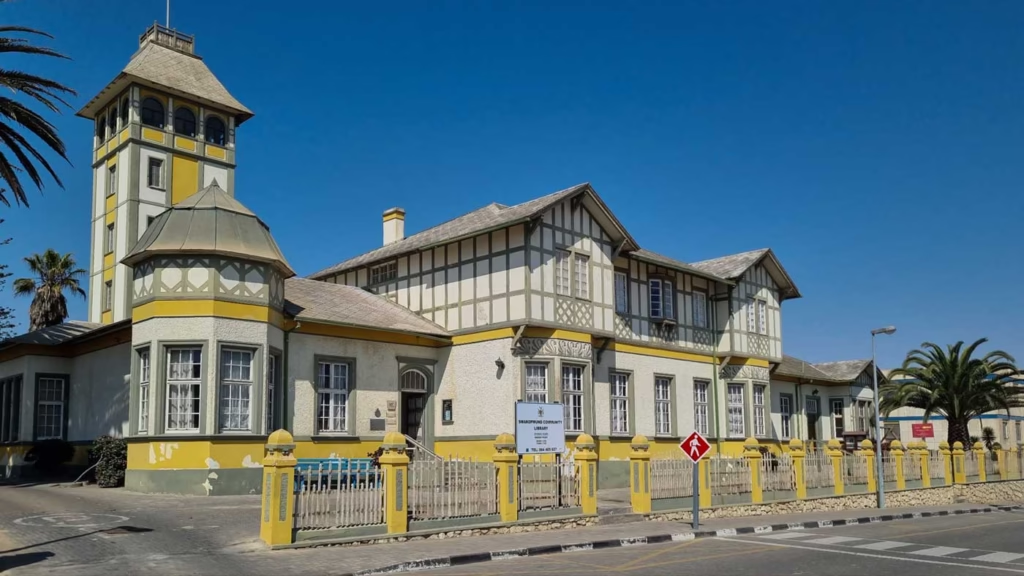
Driving south, we emerged from the fog bank into Swakopmund, a seaside resort town that feels like a slice of Bavaria transplanted to Africa. Streets here are called “Strassas,” and the German colonial architecture—ornate facades, timbered houses, pastel colours—gives the town an Old World charm.
Our day in Swakopmund included a marine cruise, where we spotted dolphins, seals, and even a whale breaching offshore. The crisp air and sweeping Atlantic views made it magical. Back on land, we explored cafés serving strudels and schnitzels, a testament to Namibia’s layered history. Optional activities abound here—quad biking over dunes, skydiving, or fat-tyre biking along the coast—but we opted for a leisurely stroll, taking in the blend of cultures that makes Swakopmund so unique.
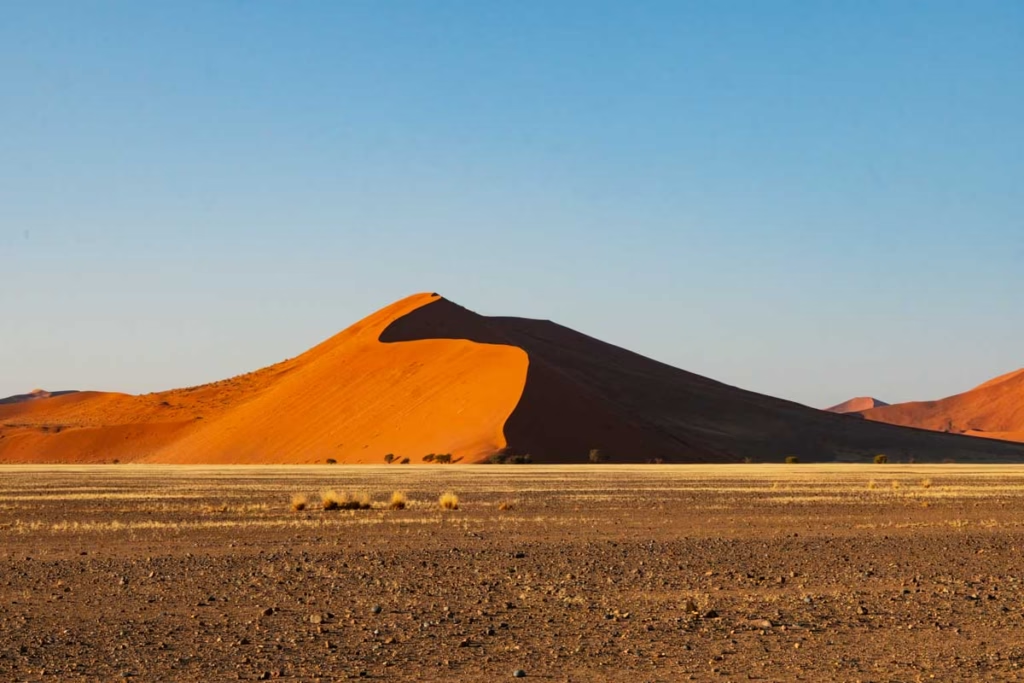
Sossusvlei and the Namib Desert: Dunes of Dreams
No trip to Namibia is complete without witnessing Sossusvlei, where towering red dunes rise like waves frozen in time. These are some of the highest dunes in the world, set in the Namib-Naukluft Park, the country’s largest protected area. Climbing them is no small feat, but the views at the top—sand stretching endlessly to the Atlantic—are unforgettable.
For photographers, the play of light and shadow is irresistible. We saw early risers trekking up Dune 45, their silhouettes tiny against the fiery ridges. If budget allows, a scenic flight over the dunes is highly recommended; from the air, the Namib becomes a living painting.
Practical Travel Tips for Namibia
- Bring a plug adapter: Namibia primarliy uses Type M plug which look a lot like a type D but are much larger. (see https://www.power-plugs-sockets.com/au/namibia/)
- Currency: Namibian dollars are accepted alongside South African rand, but the reverse isn’t true. Credit cards are widely accepted with no surcharge.
- Prepare for rough roads: Especially in Etosha—expect bumps and potholes. A guided bus tour makes the experience easier.
- Pack layers: The climate shifts dramatically—hot inland, icy fog on the coast.
- Stay at community-run lodges: It supports locals and often offers richer cultural exchanges.
- Plan for early starts: Wildlife is most active in the cool of the morning.
Our group came to Namibia looking for adventure, and we found so much more—history carved in stone, wildlife encounters that left us speechless, German-influenced towns nestled on African shores, and deserts that stretched to forever.
From watching rhinos and cheetahs in Etosha to slurping oysters by a fire on the Skeleton Coast, every moment felt unique. Namibia isn’t always easy—its roads are rough, its climates extreme—but that’s part of its beauty. It rewards those who embrace the bumps along the way.
For families, couples, and adventurous friends, a Namibia safari tour offers the kind of shared experiences that stick long after you’ve unpacked your suitcase.
If you loved this, you might also enjoy our Travelling with Kids or Solo Travel for Women guides for more inspiration.