

This is the third post in my 2026 series on cabin bags and luggage rules—because if we’re flying on a budget, we deserve to know the limits before we’re standing at the gate doing frantic luggage surgery. In Part 1, I broke down Europe’s low-cost carrier cabin bag rules (hello, strict underseat sizing). In Part 2, I covered Asia-Pacific, where weight limits can be the real tripwire. If you’re jumping in mid-series, start here: Europe Budget Cabin Bags & Luggage Rules (2026) and Asia-Pacific Budget Cabin Bags & Luggage Rules (2026).
This third guide focuses on the USA, where “budget airline” often means your base fare assumes you’re traveling with a personal item only—and anything that looks like a proper carry-on can trigger extra fees. For women (especially a solo female traveler), the goal is simple: keep your essentials close, keep your cabin bags within the published rules and limits, and protect your travel budget from those surprise add-ons that somehow cost the same as a nice dinner.
Women’s budget strategy:
- If you can fit into the personal item size, you’re winning. That’s the whole game.
- Use a soft backpack that can compress slightly; hard shells don’t negotiate.
Safety angle:
Your personal item is the one bag that stays with you even if overhead space runs out. Put valuables, meds, and anything you’d panic over in there.
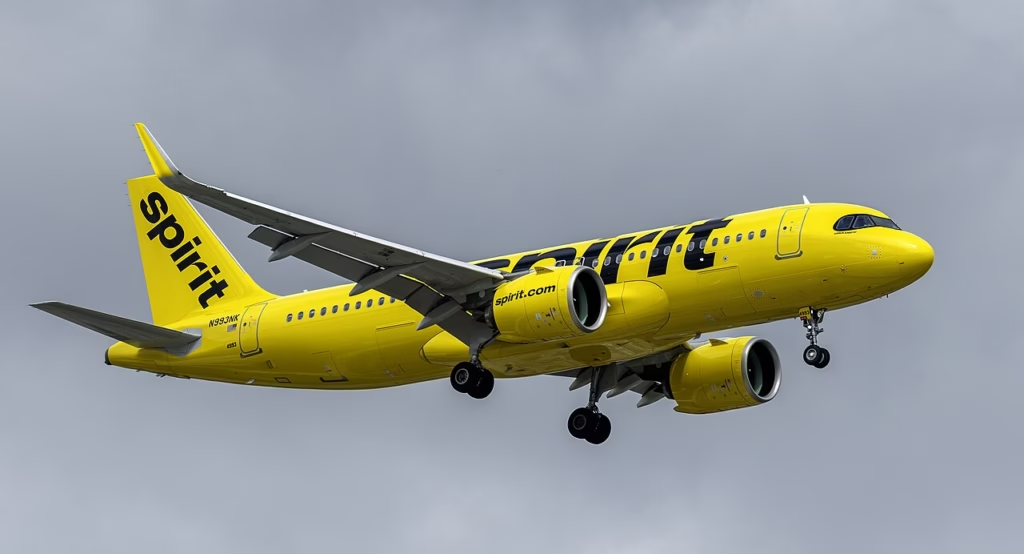
Spirit Airlines (2026): very defined personal item + carry-on sizes
Spirit lists a carry-on bag maximum dimension of *22 x 18 x 10 in – 56 x 46 x 25 cm including handles and wheels.
Spirit also states personal item dimensions of *18 x 14 x 8 in – 45 x 35 x 20 cm.
Practical note (fit + fees):
Spirit is one of the airlines most likely to charge if your personal item looks even slightly over. Use a soft backpack that can squish into the sizer, and don’t rely on bulging front pockets, that’s usually what tips you into a fee.
Practical note (carry-on costs):
If you know you’ll need an overhead carry-on, buy it during booking (or ASAP after). Waiting until the airport is basically volunteering to pay the highest price.
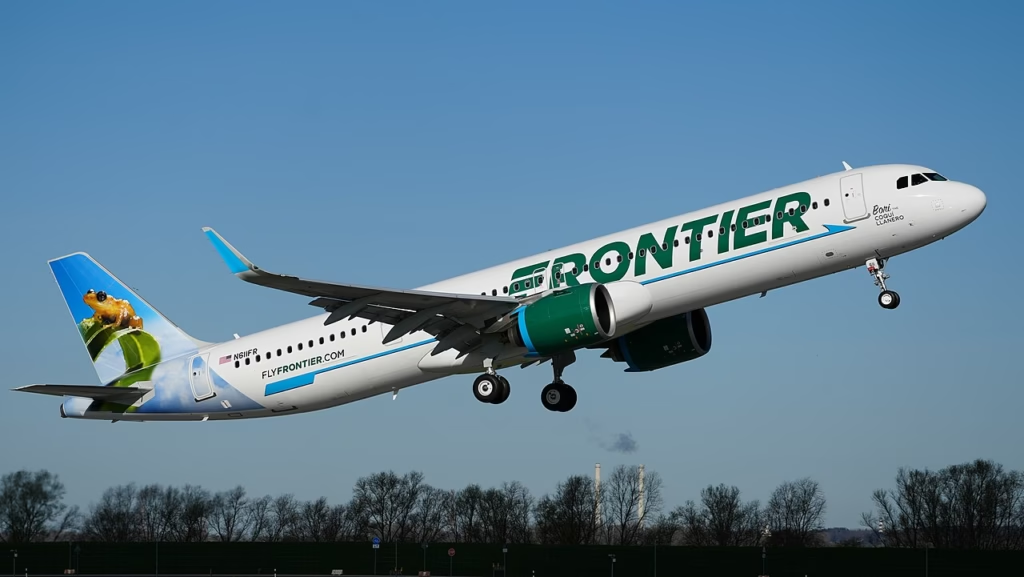
Frontier (2026): personal item dimensions are explicit
Frontier’s help guidance states personal items must be no larger than (H x W x D) 14 x 18 x 8 in – 36 × 46 × 20 cm (including handles, wheels, straps).
Practical note:
Frontier is famous for enforcing personal item sizing. If you’re trying to keep things truly budget, buy a bag that fits those dimensions comfortably without relying on “it squishes.”
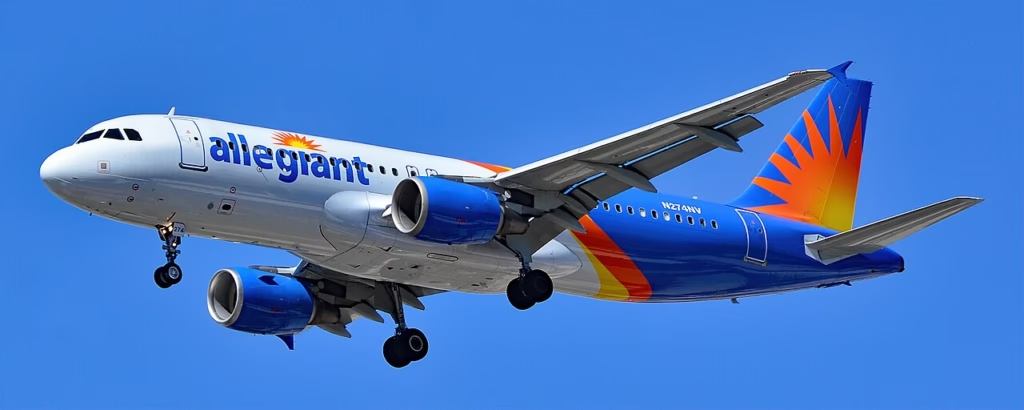
Allegiant (2026): free personal item, paid carry-on with clear dimensions
Allegiant allows one free personal item with maximum dimensions *8 x 14 x 18 in – 20 x 35 x 45 cm.
For reference: A carry-on bag (purchased) has a maximum size *10 x 16 x 22 in – 25 x 40 x 55 cm.
Women’s traveler tip:
That personal item size is actually pretty workable if you’re doing a short trip. Think: capsule wardrobe + travel-size toiletries + one pair of shoes worn on the plane.
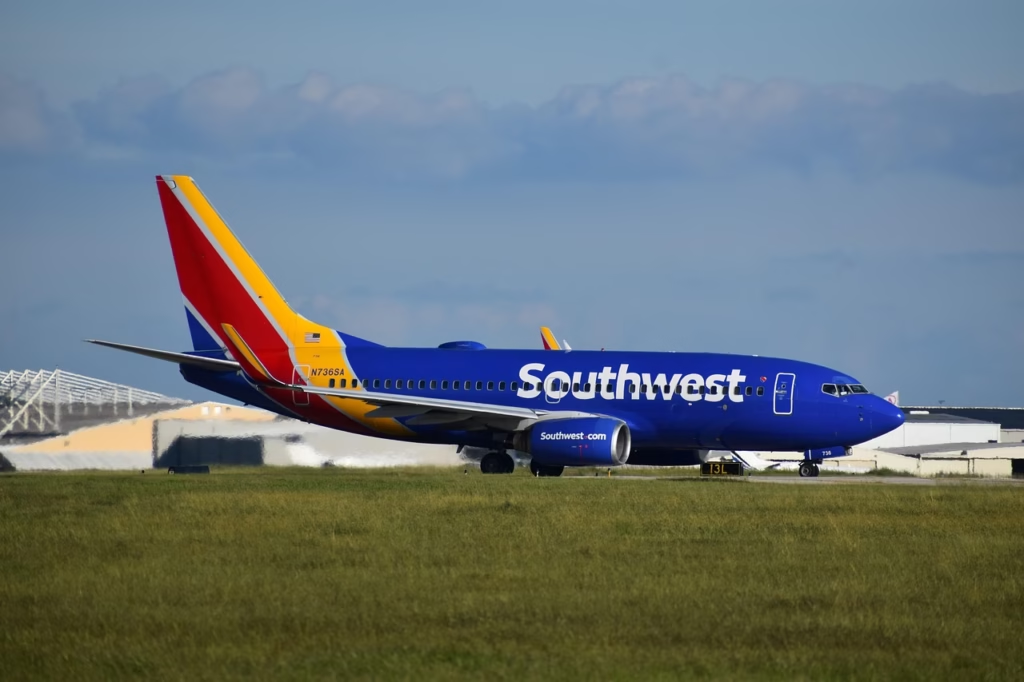
Southwest Airlines (2026): more generous carry-on sizing
Southwest’s carry-on size limit is listed as (L x W x H) 24 x 16 x 10 in – 61 × 41 × 25 cm (including wheels/handles/attachments).
Why this matters for budget:
Southwest can feel “less nickel-and-dime” on cabin baggage compared to ULCCs, and that reduces the mental load—especially if you’re traveling with gifts, gear, or you just don’t want to play luggage Tetris.
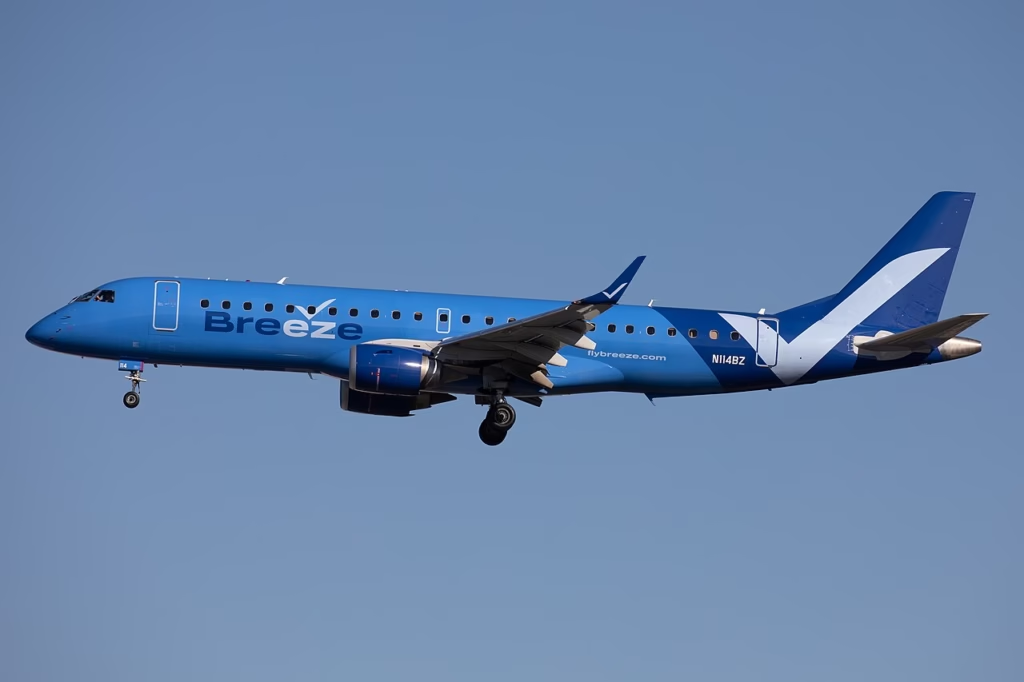
Breeze Airways (2026): personal item is smaller than you think
Breeze includes one personal item (free) that must fit under the seat, with max dimensions *17 x 13 x 8 in – 43 × 33 × 20 cm.
If you add a carry-on for the overhead bin, Breeze lists max carry-on dimensions of *22 x 14 x 9 in – 56 × 36 × 23 cm (including handles/wheels) and a max weight of 35 lb – 16 kg.
Why this matters for women traveling on a budget:
- That personal-item size is tight once you factor in a toiletries bag, tech pouch, and the “I refuse to be cold on planes” layer. It’s a classic spot where cabin bags look fine but fail the rules/limits in practice.
- The carry-on can be worth paying for if your trip includes bulkier essentials (extra shoes, winter layers, or you just want your luggage to close without wrestling it).
Do this to avoid surprise fees:
- Treat the personal item as your “seat kit” bag (passport, meds, power bank, period products, snack, warm layer).
- Keep your main bag clean-looking (no bulging pockets) so you don’t get targeted for a sizer check.
The “solo female traveler” plane kit (USA edition)
If there’s one thing I’ll nag you about lovingly, it’s this: your underseat bag is your calm. Pack it like you might have to sit on the tarmac for two hours.
Underseat essentials (women-focused):
- Passport/ID + one backup card + a little emergency cash
- Meds (including pain relief), lip balm, tissues, sanitizer
- Period products (even if you think you’re fine—travel laughs at plans)
- Power bank + cable + headphones
- A snack with protein (hanger is real and expensive in airports)
- One warm layer (planes are either a sauna or a fridge, no middle ground)
How to avoid budget luggage fees without feeling deprived
- Wear the heavy stuff. Sneakers, a jacket, and jeans can save kilos.
- Choose one color palette. You can pack less when everything matches.
- Do laundry once. The most budget move is washing mid-trip instead of paying for bigger luggage.
- If you’re traveling with another woman: coordinate items (hair tools, skincare, first-aid) so you’re not duplicating weight.
* Dimensions order may be listed differently; what matters is your bag fits within all three maximum measurements.
Wrap-up: the full 2026 cabin bags series (and the one rule that saves your budget)
If you’ve made it through all three parts, you’re officially ahead of the chaos. Here’s the punchline: most “budget” airlines make their money on luggage. Not because you did anything wrong — but because the rules and limits are designed to turn “small inconvenience” into “surprise fee.”
Across Europe, Asia-Pacific, and the USA, the pattern is the same with different accents:
- Europe: the game is usually size (especially underseat/personal item dimensions).
- Asia-Pacific: the game is usually weight (7kg means 7kg, and they often check).
- USA: the game is usually what counts as free (personal item included, overhead carry-on often paid).
The one rule that protects your budget
Pick your “baseline bag” first — the smallest free allowance you’ll most likely encounter — then pack so you can always fall back to it. For most women travelling on a budget, that means treating the personal item/underseat bag as your primary plan and the overhead carry-on as a bonus you add only when it’s worth it.
Read the full series
- Part 1 (Europe): Women’s Budget Cabin Bags & Luggage Rules & Limits in Europe (2026)
- Part 2 (Asia-Pacific): Women’s Budget Cabin Bags & Luggage Rules & Limits in Asia-Pacific (2026)
- Part 3 (USA): (this post)
And if you want the simplest way to pack lighter without feeling like you’re “missing” outfits: the 5-4-3-2-1 packing method.