
There is something quietly luxurious about women-only group travel. You get the ease of a plan, the comfort of built-in company, and (often) the freedom to be exactly yourself, without performing “fine, I’m easy” for anyone.
But not all women’s tours are created equal. Some are genuinely thoughtful, well-led, and safety-forward. Others are overpriced, underplanned, or held together with vibes and a WhatsApp group.
So let’s do this the calm way: how to choose a women-only tour that fits you, what the real costs usually look like, and the red flags that should make you close the tab and go make a cup of tea.
First, a quick self-check (so you pick the right kind of group)
Before you compare itineraries, be honest about the version of you who is actually travelling.
- Your pace: Do you want early starts and busy days, or spacious mornings and long lunches?
- Your social battery: Are you here for instant besties, gentle companionship, or a quiet seat at the edge of the group?
- Your comfort line: Are you fine sharing a bathroom, or do you need your own space to reset?
- Your “hard no” list: Overnight buses, steep hikes, big cities, shared rooms, long transfers, party vibes.
If you’re weighing group travel because you’re returning to solo trips after a long break, you might enjoy Why Travel After 60 Can Be Your Most Adventurous Chapter Yet. It’s a warm reminder that you’re allowed to choose comfort and still call it adventure.
How to choose a women-only tour that actually suits you
1) Look for clarity (not hype)
A trustworthy operator makes it easy to understand what you’re buying. You should be able to answer these without detective work:
- Where do we sleep each night (or at least what standard and area)?
- How many hours are we moving most days?
- What’s included, and what will I pay for on the ground?
- How much free time is truly free?
If the itinerary reads like a perfume ad (mystical, unforgettable, transformative) but won’t tell you how you’re getting from A to B, that’s your first raised eyebrow.
2) Match the group size to your nervous system
Group size changes everything: how quickly you move, how personal it feels, and whether you can actually hear the guide.
- Smaller groups can feel more flexible and less “herding.”
- Larger groups can cost less per person, but often move slower and feel more structured.
Neither is morally superior. It’s just about what makes you feel steady.
3) Check the leader like you’d check a babysitter (lovingly, thoroughly)
In women-only group travel, the tour leader sets the tone. A good leader creates ease. A mediocre one creates tension. A bad one creates risk.
Look for specifics:
- Leader name and background (not just “expert local guide”)
- How many leaders are on the trip (and what the backup plan is)
- Emergency processes (medical support, lost passport, harassment, natural disasters)
- A code of conduct (yes, even for adults)
And if safety is part of why you’re choosing a group, keep your personal habits strong too. This is where Solo Women’s Travel Safety After 60 is useful at any age. The strategies travel beautifully into group settings.
4) Understand the rooming options (this is where many women get stung)
Ask this early. Not later. Not once you’ve mentally moved into the hotel.
- Single room: What is the true extra cost and what does it include?
- Room share: Do they match you, and how? What happens if no match is found?
- Room standard: Are solo rooms smaller or “internal” rooms in some hotels?
A reputable company explains this plainly. A messy company gets vague or defensive.


What women-only group travel really costs (and how to compare properly)
Here’s the truth: the headline price is only the beginning. Compare tours by building a “real total” list.
Start with what’s usually included
- Accommodation (check if breakfasts are included)
- Some transport (but not always airport transfers)
- Some activities (but often not everything listed as “optional”)
- Some meals (rarely all)
- Guide services (sometimes tips are expected on top)
Then add the common extras people forget
- Flights: Are international or domestic flights included?
- Airport transfers: Included both ways, or “make your own way”?
- Meals: Especially dinners in expensive cities or resorts.
- Entrance fees: Museums, parks, permits, city taxes.
- Tipping: Guides, drivers, local staff.
- Insurance: Often required. Always wise.
- Visas and entry requirements: Vary by passport and routing.
One practical tip: plan for disruptions as well. A delayed flight can turn into an unplanned hotel night, extra meals, and new transport. Two womens.travel reads worth keeping in your back pocket are Holiday Travel 2025: A Woman’s Guide to Flight Chaos & Delays and Flight Canceled? A Guide for Solo Women & Families.
A simple way to compare tours (without spreadsheets)
When you’re torn between two trips, ask yourself:
- Which one gives me more time (less rushing, fewer “optional” add-ons)?
- Which one gives me more certainty (clear inclusions and policies)?
- Which one gives me more support (leader presence, emergency plan, local partners)?
The cheapest tour is not always the best value. The most expensive is not always the safest. The best one is the one that tells the truth clearly.


Red flags in women’s group tours (the “close the tab” list)
- Vague itinerary: No clear locations, no transport details, no accommodation standard.
- Pressure tactics: “Only 2 spots left” every day, countdown timers, rushed deposits.
- Unclear cancellation terms: If you can’t find them easily, that’s the point.
- Payment weirdness: Pushing bank transfers only, or refusing secure payment methods.
- Safety hand-waving: “You’ll be fine” instead of a real safety plan.
- No leader details: You don’t know who is responsible for the group on the ground.
- Rooming traps: The solo cost is hidden or only mentioned after you enquire.
- Too much ‘optional’: A low headline price, then you pay extra for everything that made you want the tour.
And a subtle one: if they cannot answer questions kindly. You are not being “difficult.” You are being an adult buying an expensive service.

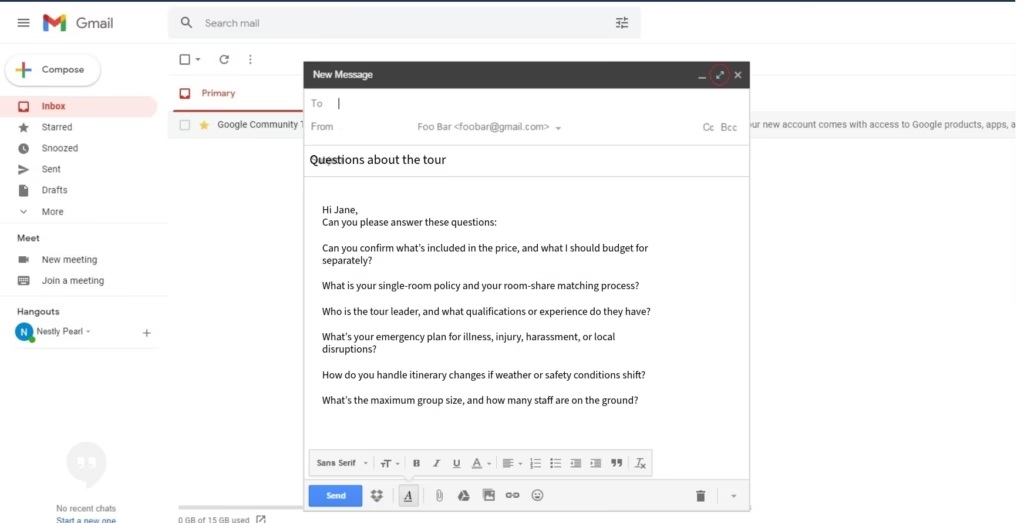
What to ask before you book (copy/paste these into an email)
- Can you confirm what’s included in the price, and what I should budget for separately?
- What is your single-room policy and your room-share matching process?
- Who is the tour leader, and what qualifications or experience do they have?
- What’s your emergency plan for illness, injury, harassment, or local disruptions?
- How do you handle itinerary changes if weather or safety conditions shift?
- What’s the maximum group size, and how many staff are on the ground?
If you want a little emotional encouragement to go with the practical, People We Meet on Vacation is a gentle reminder of why travelling with strangers can become one of the best decisions you make.
Final thoughts from an older traveller who’s learned the hard way
Women-only group travel can be a beautiful middle path. You get independence without loneliness, structure without rigidity, and support without being parented.
Choose the tour company and tours that resonate with you, respects your time, your money, and your nervous system. Ask the questions. Read the terms. Trust how your body feels when you’re dealing with the company.
And if it all feels like a lot, remember this: you don’t need to plan perfectly. You just need to choose wisely enough that you can relax once you arrive.